Dr. S. Y. Ibrahim FBDFM, MIRDN, MNPSA
Department of Public Administration
University of Maiduguri
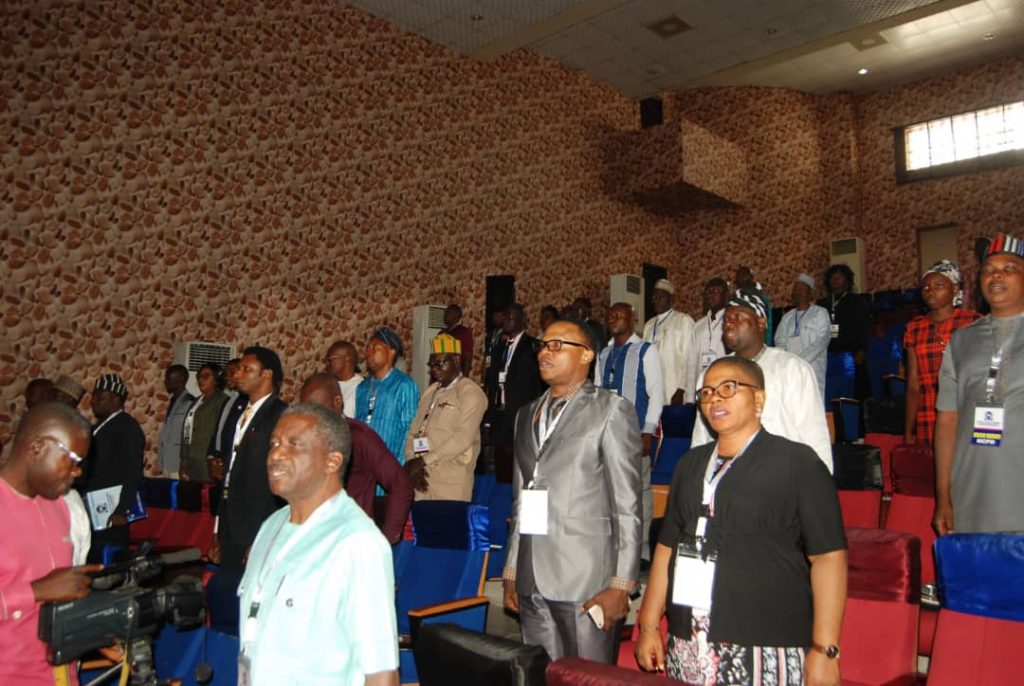
Being a paper presented at the 18th Mandatory Continuing Professional Development (MCPD),
Investiture of Fellowship and Induction of New Members of the Institute of Business Diplomacy and Financial Management (IBDFM), held on Saturday, 7th September, 2019, at College of Nursing and Midwifery Yola, Adamawa State
1
1.1 Introduction
All organizations are purposive because they are established to accomplish an objective. Public Enterprises came to exist as a result of the devastations experienced from the two world wars. They were established to deal with the problems of hunger, diseases, unemployment, insecurity, extreme poverty, infrastructural decay, financial and other economic crisis that characterized the economies of various nations. The state interventions were encouraged based on the Keynesian Theory which reinforces that, states can intervene in the production of goods and services in the event of a complete market failure and extreme economic meltdown.
This marked the emergence of public enterprises in the world and indeed Nigeria. Very many public enterprises have been established in Nigeria and were doing well at the beginning but suddenly most if not all of them collapsed or about to collapse. This sad trend however raises a lot of questions which I consider borders on management of these enterprises.
1.2 Management and Public Enterprise Defined
- Management: The concept of management has many interpretations. Nwachukwu (1999)identified the following:
(i).
(ii).
(iii).
Some refer to it as group of people charged with the running of the organization e.g.
Health Management Board.
Others refer to it as a process demanding the performance of a specific function. That
is, a profession.
Others see it as an academic
discipline to be studied in the tertiary level of education.
A more scientific definition of management is the coordination of all the resources of an organization through the process of planning, organizing, directing and controlling in order to attain organizational objectives (Nwachukwu, 1999).
- Public Enterprise: This is also called state ownership or government ownership. It is abusiness that is either wholly or partially owned and managed by a government. Any enterprise
2
which has government ownership and is engaged in the production of goods and services and is created by specific law which gives it authority to engage in designated activities under designated condition, regardless of whether it is owned by the federal, state or local government is called public enterprise (Balami and Maidugu, 1996).
Laleye (2002) on the other hand, sees state/public enterprise as an organization that is set up as a corporate body and as part of the governmental apparatus for an entrepreneurial like objective.
From the foregoing, it is clear that public Enterprises require legal backing, clear definition of purpose and appropriate personnel to pilot their affairs.
1.3 Evolution of Public Enterprises in Nigeria
The history of public enterprises evolution is very long indeed. However, in Nigeria its development can be traced to how productive forces within the economy were organized by the leaders who governed the country. Public Enterprises offered the leaders a more flexible tool of development than government departments (Balami and Maidugu, 1996).
Public Enterprises in pre-independent Nigeria came into being as department units, social or public utilities such as the Railways, Public works, Post and Telegraph etc. These were operated purely for welfare objectives and very few public enterprises existed at independence. However, years after independence, tremendous pace of public enterprise development came to the fore as a result of weaknesses of private sector, the lack of infrastructure, low level of social and human development etc,(Usman, 20160).
Added to the above was the urge to generate revenue and to limit foreign economic domination. Public Enterprises in Nigeria developed in the social sphere of education, health, information, housing town planning, manufacturing, Commerce, employment etc. (Laleye, 2002).
1.4 Classification of Public Enterprises
3
Different classifications by various scholars exist but at the final analysis, they all point to the same thing. As such this paper will classify public enterprises based on contemporary state of Nigeria:
- Communication and Media Enterprises:
(i).
(ii).
(iii).
The Nigerian Broadcasting Commission (NBC)
News Agency of Nigeria (NAN)
Nigerian Television Authority
(NTA)
- Economic Enterprises
(i).
(ii).
(iii).
Nigerian Investment Promotion Commission (NIPC)
Nigerian Export Promotion Council (NEPC)
Bureau of Public Procurement
(BPP)
- Energy Enterprises
- Energy Commission of Nigeria (ECN)
- Nigerian National Petroleum Corporation (NNPC)
- Nigerian Electricity Regulatory Commission (NERC)
- Intelligence
(i).
(ii).
(iii).
State Security Service (SSS)
National Intelligence Agency (NIA)
Defence Intelligence Agency (DIA)
- Law Enforcement
(i).
(ii).
(iii).
The Nigerian Police Force (NPF)
The Nigerian Copyright Commission (NCC)
The National Drug Law Enforcement
Agency (NDLEA)
- Other Enterprises
(ii).
(iii).
National Orientation Agency (NOA)
National Universities Commission (NUC)
Federal Aviation Authority of
Nigeria (FAAM)
4
Justifying the need for public enterprises, Imuetinyan (2010) stated that, they are basically created for services which are not suited to the civil service mode of operation. This is because the civil service work is characterized by strict compliance with rules, regulations and procedures, excessive paper work among others.
1.5 Managing Public Enterprises in Nigeria
Observations and discussions on the management of public enterprises in Nigeria point to extremely bad position. The high expectations and hopes seem to have been skewed to the extent that, wide gap exists between hopes and actual results. This sordid and unhealthy situation was created by bad leadership (Manager/MD/GMD).
For one to be appointed into such an amiable position, certain requirements are very essential.
These qualities include:
- Trust
- Integrity
- Honesty
- Team builder
- Visionary
- Good personality
By the time all the above are obtained, then politicization of appointment must also be avoided. When appropriate personality is put in place to lead the affairs of an enterprise, and everything being equal provision of goods and services can be guaranteed, thereby justifying their existence.In Nigeria, it is lack of adherence to the above qualities that very many public enterprises collapsed. To add insult to injury is the constitution of Board Members for these public enterprises.
Even in older federations like Britain, USA where their nationhood is more than 200 years, they still hold in high esteem the qualities mentioned above talk less of a nation that is only 60 years and does not observe these qualities totally.
5
Other reasons for the challenges of public enterprises in Nigeria are not farfetched. There is no organization whether public or private that does not require efficient management. However, in the case of public enterprises in Nigeria which are run strictly in accordance with government directions in order to achieve their aims, have over the years been marked by high level management challenges some of which are:
- Lack of efficient management
- Appointment of incompetent Board Members
- Irrational application of resources
- Corruption and Embezzlement
- Lack of autonomy
1.6 Analysis of Management Challenges and Possible Solutions
| S/No. | Types of Problem | Interpretation | Possible Solution | |||||||||||
| 1. | Lack | of | efficient | Wrong planning, improper | Clarity | of | objectives | and | ||||||
| management | budgeting, | inadequate | proper | planning | towards | |||||||||
| funding | achieving them. | |||||||||||||
| Adherence | to | budgetary | ||||||||||||
| preparation | and | |||||||||||||
| implementation | ||||||||||||||
| 2. | Appointment | of | Appointment | of | party | Avoid | patronizing | god- | ||||||
| incompetent | Board | loyalist | ho | don’t | have | fatherism approach. | Where is | |||||||
| members | experience or | knowledge | an avoidable, appoint | those | ||||||||||
| of how to operate the | with requisite idea | |||||||||||||
| enterprise | ||||||||||||||
| 3. | Irrational | application of | Wrong use | of | resources | Avoid | unnecessary | travels, | ||||||
| resources | such | as | travelling | high | cost | accommodation, | ||||||||
| allowances, | Expensive | misplacement of priorities. | ||||||||||||
| accommodation | for | |||||||||||||
| management members etc. | ||||||||||||||
| 4. | Corruption | and | Claiming | unlawful | Self-discipline and adherence | |||||||||
| Embezzlement | entitlements, | receipts | of | to laid down rules and | ||||||||||
| gratification, | inflation | of | regulations of the enterprise. | |||||||||||
| contracts, | tribalism, | |||||||||||||
| nepotism | and | fraudulent | ||||||||||||
| practices. | ||||||||||||||
| 5. | Lack of autonomy | Board | members | are | Avoid | unnecessary | ||||||||
| pressurized | by | the | interference | which | in | most | ||||||||
| supervisory | agency | or | cases are in conflict with | |||||||||||
| ministry to deviate. | principles mode of | operation | ||||||||||||
| and objectives. |
6
1.7 Conclusion
There are many challenges confronting public enterprises management in Nigeria such as the Nigerian Airways, NNDC, NEPA among others which collapsed or about to collapse and were sold to some private individuals largely due to management challenges. However, hope is not completely lost with the coming into existence of this institute with visionary personalities, honest and trustworthy members. This paper is of the view that, if the above identified challenges and the suggested solutions are followed, public enterprises will be on the right track of producing goods and services for which they are established to perform for the wellbeing of the citizenry.
Thank you for listening